

 Tyler Campbell
Every great leader carries the marks of a faithful follower. This isn't merely a developmental phase we pass through on our way to positions of authority—it's a posture that shapes how we lead, whom we serve, and why we do what we do. Whether standing in the pulpit or pacing the sidelines, the capacity to follow well determines the quality of our leadership far more than natural talent or charisma ever could.
The Paradox of Leadership
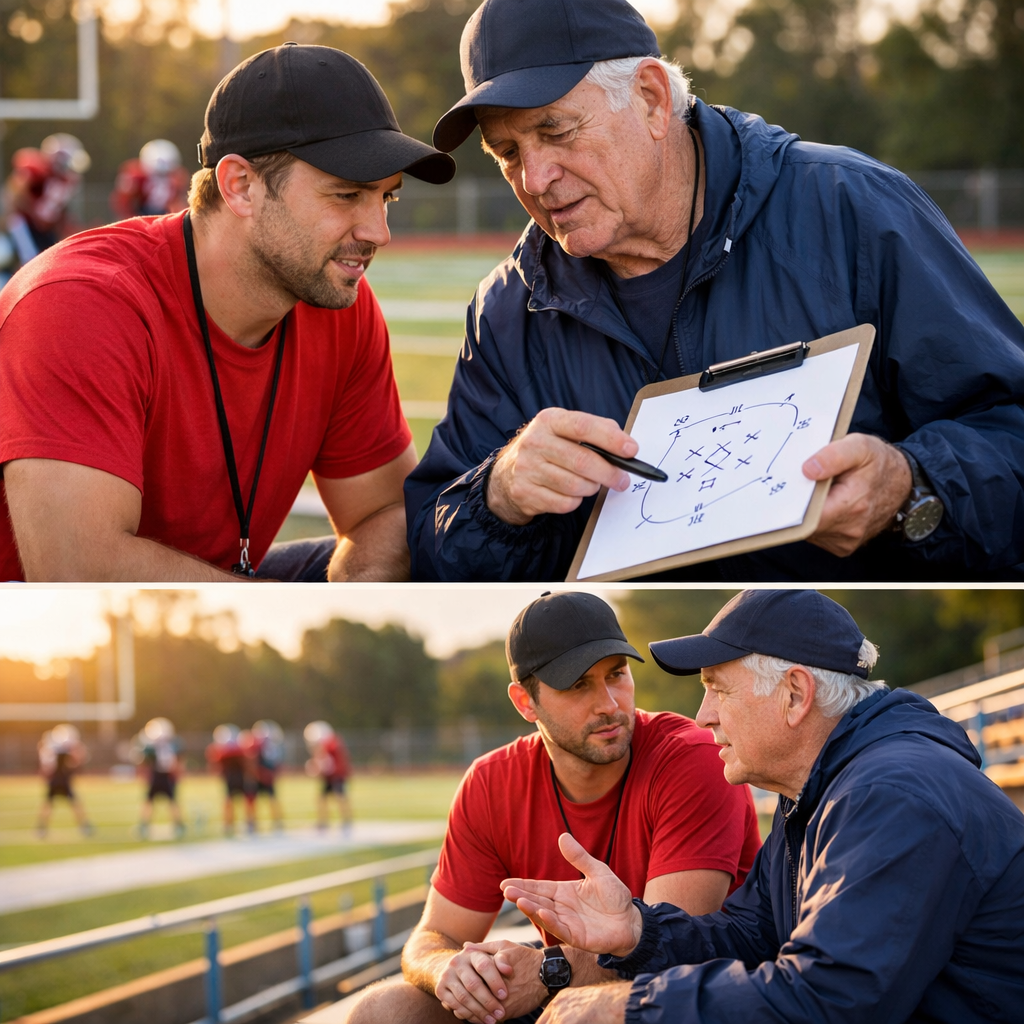
Jesus established the most counterintuitive leadership model in human history when He declared, "But whoever would be great among you must be your servant, and whoever would be first among you must be slave of all" (Mark 10:43-44). Jesus did not simply teach this principle; He embodied it. The Son of God washed feet, submitted to the Father's will, and approached His mission with the declaration, "I seek not my own will but the will of him who sent me" (John 5:30). Christ's entire earthly ministry was an exercise in following before leading. This same pattern appears on every successful football team. The quarterback who refuses to follow the offensive coordinator's game plan becomes a liability, not a leader. The captain who won't submit to his position coach's instruction forfeits the moral authority to call out his teammates. Championship teams are built not on talented individuals who demand their own way, but on skilled players who can subordinate personal preferences to collective goals.
The Teachable Spirit
Following another’s lead requires something pride finds intolerable: teachability. A teachable spirit acknowledges that we don't have all the answers, that wisdom exists beyond our current understanding, and that growth demands humility. Proverbs reminds us, "The way of a fool is right in his own eyes, but a wise man listens to advice" (Proverbs 12:15). This isn't about being weak-willed or lacking conviction. It's about recognizing that God distributes gifts, experiences, and insights across His body, and we need one another.
In coaching, I've watched talented athletes plateau because they believed they had learned enough. They stopped absorbing feedback, dismissed constructive criticism, and convinced themselves that their raw ability exempted them from continued development. Meanwhile, less naturally gifted players surpassed them simply by remaining coachable. The difference wasn't talent—it was the willingness to follow instruction, to learn from failure, and to grow under authority.
The same dynamic plays out in ministry. Pastors who isolate themselves from accountability, who refuse coaching, or who believe their position places them beyond correction inevitably stumble. The most effective spiritual leaders I know are those who still sit under teaching, who actively seek counsel from mature believers, and who approach God's Word as perpetual students rather than arrived experts.
Following Reveals Character
How we follow exposes what kind of leaders we'll become. Do we only follow when we agree with every decision? Do we undermine authority when we're asked to do something that doesn't align with our preferences? Do we gossip about leadership rather than offering respectful feedback through proper channels?
These questions matter because leadership is not fundamentally about position; it's about character. Paul instructed Timothy, "Let no one despise you for your youth, but set the believers an example in speech, in conduct, in love, in faith, in purity" (1 Timothy 4:12). Notice that he didn't say, "Set an example in your preaching techniques" or "Set an example in your strategic planning." Character precedes competency in kingdom leadership.
On the practice field, this looks like the senior who demonstrates maximum effort in every drill, even when he disagrees with the monotony. It looks like the assistant coach who supports the head coach's decision publicly, even when he lobbied for a different approach in the staff meeting. It looks like the player who accepts a reduced role without poisoning the locker room with bitterness.
The Discipleship Connection
Following is the essence of discipleship. When Jesus called His first disciples, He didn't say, "Come and lead." He said, "Follow me, and I will make you fishers of men" (Matthew 4:19). For three years, these men watched, learned, questioned, and imitated their Rabbi. They saw how He prayed, how He handled conflict, how He prioritized people over programs, and how He maintained intimacy with the Father amid crushing demands. Only after this prolonged apprenticeship did Jesus commission them to lead others.
This pattern should inform how we develop leaders in both the church and on the field. We don't simply elevate people to leadership because they're talented, popular, or available. We invest in followers—people who have demonstrated faithfulness in submission, who've shown they can receive correction, and who've learned to serve without spotlight or status.
Many pursue leadership positions in the local church, sensing God's commission to serve in more visible or influential capacities. The wisdom here is straightforward yet often overlooked: become a great church member first. Show up faithfully. Serve without recognition. Support leadership even when decisions don't align perfectly with your preferences. Engage in the mundane work of the body—setting up chairs, greeting visitors, praying for others, giving consistently. Every effective church leader has learned the essential lessons of leadership through the faithful practice of membership, discovering that learning to follow is the prerequisite for learning to lead. The elder who never learned to submit to church leadership will struggle to shepherd well. The ministry leader who skipped the apprenticeship of faithful membership will lack the wisdom that comes from observing leadership up close through seasons of both growth and challenge.
Humility as the Foundation
At its core, the willingness to follow flows from humility—the accurate assessment of ourselves before God and others. Humble leaders don't feel threatened by following someone else's lead because their identity isn't wrapped up in always being in charge. They can submit to authority, defer to others' expertise, and celebrate teammates' success because they're secure in who God has made them to be.
This humility doesn't make leaders weak; it makes them wise. It creates space for collaboration, invites diverse perspectives, and builds trust within teams. Players run through walls for coaches who've shown they can learn, adapt, and admit mistakes. Congregations follow pastors who demonstrate they're still being shaped by Scripture rather than simply shaping it to fit their preferences.
The Lifelong Journey
Learning to follow before we lead isn't a box we check and move beyond—it's a lifelong journey. Even as we step into positions of greater responsibility, we must maintain a follower's heart. We follow Christ. We follow godly mentors. We follow wise counsel. We follow the Spirit's prompting. And in doing so, we become the kind of leaders worth following.
The question isn't whether we'll lead. If we're alive, we're influencing someone. The question is what kind of leaders we will be. Will we be prideful positional leaders who demand submission we're unwilling to model? Or will we be servant leaders who understand that the path to godly influence is paved with faithful followship? The answer to that question won't just determine our leadership legacy—it will reveal the condition of our hearts.